
Toddler Feeding Guides
Toddler Meal Plan 12–18 Months: 7-Day Guide With Recipes and Portions
Complete 7-day toddler meal plan for ages 12–18 months with breakfast, lunch, dinner, and snack ideas. Includes portion sizes and iron-rich meal focus.

The transition from baby to toddler at 12 months brings the most significant shift in your child's eating since they first started solids. Formula disappears, whole milk arrives, purees give way to soft family foods, and the expectation of self-feeding takes centre stage. This 7-day meal plan is designed specifically for the 12–18 month window, with all meals meeting toddler safety standards, hitting iron and calcium targets, and using simple ingredients that take 15 minutes or less to prepare.
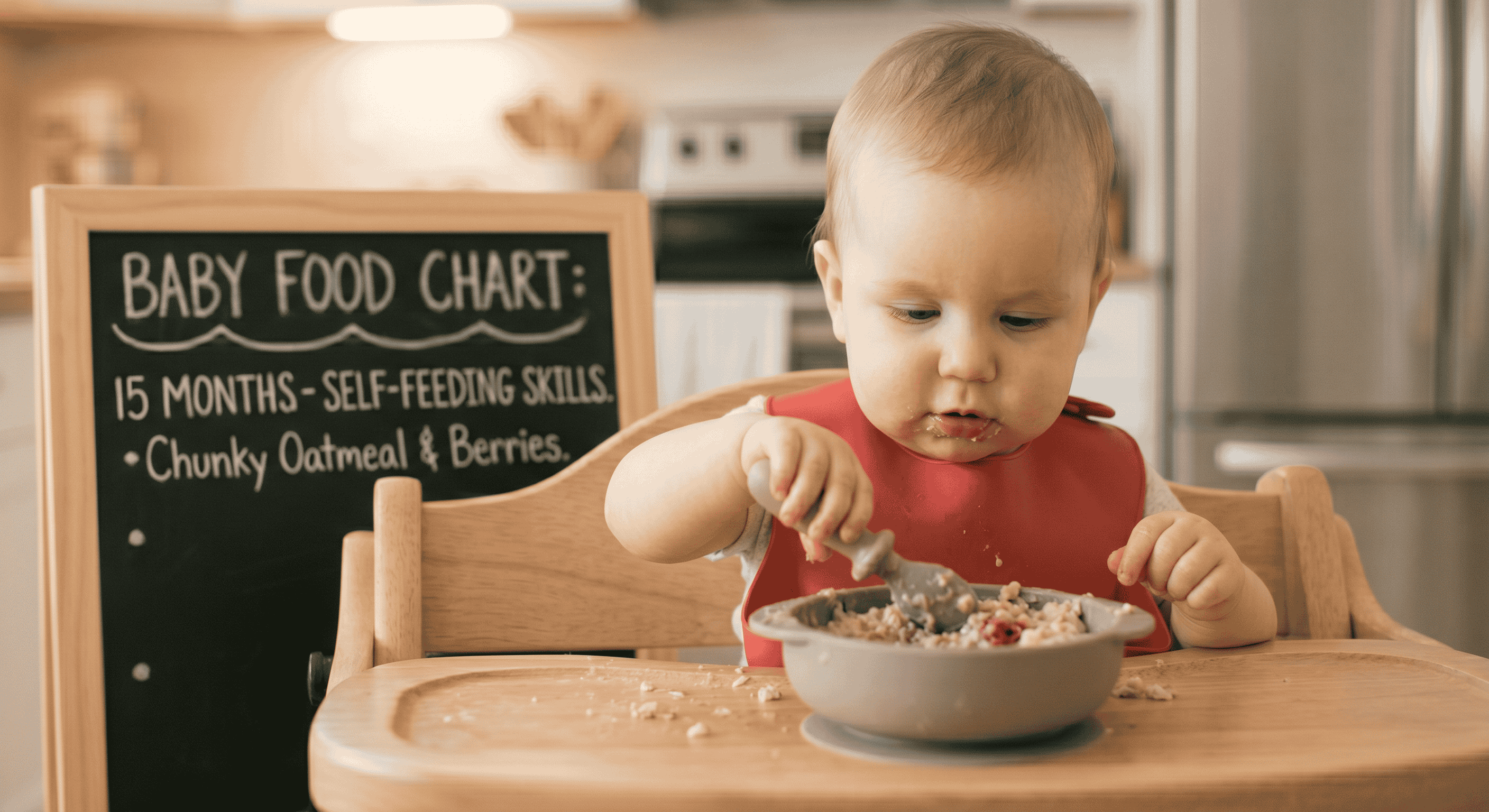
15 Months – Self-Feeding Independence (Clumsy Spoon Skills)
Now a 15-month-old toddler, the child is practising self-feeding autonomy. The setting remains the same kitchen, but the toddler is sitting slightly closer to the counter. They are actively using a clumsy, short-handled spoon to eat thick, chunky oatmeal mixed with mashed berries. The tray shows natural evidence of mess. A laminated sheet with magnets on the refrigerator in the background reads: "BABY FOOD CHART: 15 MONTHS - SELF-FEEDING SKILLS. Chunky Oatmeal & Berries."
How to use this meal plan
Each day provides approximately 1,000 calories across 3 meals and 2 snacks — the recommended amount for a 12–18 month old toddler. Portions are based on the 1 tablespoon per year of age guideline; at 12–14 months that means approximately 1–2 tablespoons of each food item, increasing toward 2 tablespoons as your toddler approaches 18 months.
Key rules built into every day:
- Iron-rich food at every main meal
- Vitamin C food at every iron-containing meal (to boost absorption)
- Whole milk at 2–3 eating occasions (16–24 oz total per day)
- At least one new or less-preferred food offered alongside an accepted food at each meal
- All round foods quartered; all meats shredded or finely minced; all vegetables soft-cooked until squishable
Do not feel bound to follow the days in order or replicate every meal exactly. Use this as a template for the kinds of combinations to aim for, swapping out individual components for preferred equivalents.
Day 1
Breakfast:
- Scrambled egg (1/2 egg, soft and moist)
- Whole grain toast soldiers (1/2 slice, cut into 4 strips)
- Quartered strawberries (4–5 quarters)
- Whole milk (4–6 oz)
Morning snack:
Lunch:
- Soft pasta with meat sauce (2 tbsp pasta + 1 tbsp minced beef sauce)
- Steamed broccoli florets (2–3 small florets)
- Water in a cup
Afternoon snack:
- Soft cheddar cheese cubes (2–3 small cubes)
- Whole grain rice crackers (2)
Dinner:
- Shredded chicken thigh (1–2 tbsp)
- Mashed sweet potato (2 tbsp)
- Soft-cooked peas (1 tbsp)
- Whole milk (4–6 oz)
Iron sources today: egg, beef, chicken. Vitamin C pairings: strawberries, broccoli, sweet potato.
Day 2
Breakfast:
- Iron-fortified baby oatmeal made with whole milk (3–4 tbsp cooked)
- Mashed banana (1 tbsp)
- Drizzle of smooth peanut butter (thinned with a little milk to spreadable consistency)
- Whole milk (4–6 oz)
Morning snack:
Lunch:
- Lentil soup (3 tbsp soft-cooked lentils in broth)
- Soft bread torn into small pieces (1/2 slice)
- Quartered cherry tomatoes (2–3)
- Water
Afternoon snack:
- Cucumber spears (soft, deseeded, skin removed — 2 small spears)
- Full-fat yogurt dip (1 tbsp)
Dinner:
- Salmon flakes (1–2 tbsp canned or cooked)
- Soft-cooked rice (2 tbsp)
- Roasted butternut squash cubes (2 tbsp)
- Whole milk (4–6 oz)
Iron sources today: iron-fortified oatmeal, lentils, salmon. Vitamin C pairings: banana, tomatoes, squash.
Day 3
Breakfast:
- Mini egg and vegetable muffin (made with egg + grated courgette/spinach + cheese, baked in mini muffin tin — 1 mini muffin)
- Quartered blueberries (6–8 berries quartered or lightly squished)
- Whole milk (4–6 oz)
Morning snack:
- Whole grain crackers (2) with thin cream cheese spread
- Soft ripe pear pieces (2 tbsp)
Lunch:
- Chicken and avocado on soft toast strips (1 tbsp shredded chicken + 1/2 tbsp mashed avocado on 1/2 slice toast)
- Soft-cooked carrot coins (2–3 coins, steamed until soft)
- Water
Afternoon snack:
- Full-fat yogurt (3–4 tbsp) with iron-fortified toddler cereal stirred in (1 tbsp)
Dinner:
- Minced lamb with soft-cooked couscous and roasted capsicum (red pepper — 1 tbsp mince, 2 tbsp couscous, 1 tbsp capsicum pieces)
- Water or whole milk
Iron sources today: egg, chicken, lamb, fortified cereal. Vitamin C pairings: blueberries, pear, capsicum.
Day 4
Breakfast:
- Whole grain mini pancakes (2 small, made with oat flour, egg, and whole milk)
- Soft-cooked apple slices (2 tbsp, cooked until soft)
- Whole milk (4–6 oz)
Morning snack:
- Hummus (1 tbsp) with soft-cooked broccoli spears (2–3 florets as dippers)
Lunch:
- Black bean and sweet potato soft taco filling (2 tbsp black beans mashed + 1 tbsp sweet potato) on soft tortilla strips
- Avocado pieces (1 tbsp)
- Water
Afternoon snack:
- Banana coins (4–5)
- Mozzarella cubes (2 small)
Dinner:
- Beef and vegetable soft-cooked stew (1–2 tbsp minced beef + 2 tbsp assorted soft-cooked vegetable pieces in broth)
- Soft whole grain bread for dipping (1/2 slice)
- Whole milk (4–6 oz)
Iron sources today: egg (pancake), black beans, beef. Vitamin C pairings: apple, avocado, tomatoes (if in stew).
Day 5
Breakfast:
- Scrambled egg with soft-cooked spinach mixed in (1/2 egg + 1 tsp spinach)
- Whole grain toast soldiers (2 strips)
- Quartered strawberries
- Whole milk (4–6 oz)
Morning snack:
- Full-fat yogurt with mashed banana and iron-fortified cereal (3 tbsp yogurt)
Lunch:
- Tuna pasta salad (2 tbsp soft pasta + 1 tbsp canned tuna in water + thin mayo or avocado)
- Soft-cooked peas (1 tbsp)
- Quartered grapes (4–5 quarters)
- Water
Afternoon snack:
- Avocado on rice cake
- Soft pear or peach pieces
Dinner:
- Chicken and vegetable rice bowl (1–2 tbsp shredded chicken + 2 tbsp soft-cooked rice + 1 tbsp mixed soft vegetables)
- Whole milk (4–6 oz)
Day 6
Breakfast:
- Iron-fortified baby oatmeal (3–4 tbsp) with mashed blueberries (lightly squish or quarter) and full-fat milk stirred in
- Whole milk (4–6 oz)
Morning snack:
- Soft cheese on whole grain crackers (1 oz cheese, 2 crackers)
- Soft ripe mango pieces
Lunch:
- Lentil and vegetable soup with soft bread (3 tbsp soup + 1/2 slice bread)
- Steamed broccoli florets
- Water
Afternoon snack:
- Mini egg muffin (made ahead and stored in fridge)
- Quartered grapes
Dinner:
- Salmon fish cakes (mini patties made from canned salmon + mashed potato, baked — 1 small patty)
- Soft-cooked green beans (2–3 pieces)
- Roasted sweet potato wedges (2–3 small wedges)
- Whole milk (4–6 oz)
Day 7
Breakfast:
- French toast fingers (1 slice whole grain bread soaked in egg and milk, cooked — cut into strips)
- Quartered strawberries or soft berries
- Whole milk (4–6 oz)
Morning snack:
- Full-fat yogurt (4 tbsp) with banana
Lunch:
- Soft pasta with lentil bolognese (2 tbsp pasta + 2 tbsp lentil sauce with hidden grated carrot and courgette — note: the vegetables are not hidden here, grated so they blend naturally into the sauce while still visible)
- Water
Afternoon snack:
- Avocado cubes (1/4 small avocado) with rice crackers
- Soft pear slices
Dinner:
- Turkey meatballs (mini, soft-cooked — 2 small meatballs)
- Soft pasta (2 tbsp)
- Roasted capsicum strips (1 tbsp)
- Whole milk (4–6 oz)
Batch cooking tips for busy parents
Cook once, eat three times: When making minced meat sauce, lentil soup, or mashed sweet potato, double or triple the recipe. Freeze in tablespoon-sized portions in an ice cube tray. You will have 2–3 weeks of meal components ready to defrost quickly.
Iron-fortified oatmeal: Make a large pot on Sunday (5 minutes of active time), refrigerate, and reheat individual portions each morning in 1–2 minutes.
Egg muffins: 12 mini muffins take 20 minutes total. They refrigerate for 3 days and freeze for 1 month. One per breakfast for a week.
Lentil soup: Batch cook on Sunday. Lentil soup improves with age and reheats perfectly. Serve some smooth (blended), some with whole lentils, for texture variety.
Common challenges at 12–18 months
Throwing food: Normal and developmental. Stay neutral, remove the food if the throwing continues ("looks like you're finished, we'll have more at snack time"), and offer again at the next eating occasion.
Refusing all meat: Offer meat in mixed dishes (sauce, soup, stew) where texture is less noticeable. Iron-fortified cereal and lentils can substitute. Discuss with your pediatrician if protein intake seems very low.
Wanting only milk: Gently limit milk to meals. Between meals, offer water only. If your toddler is filling up on milk, meal appetite will naturally improve within 3–5 days of enforcing meal-only milk.
Rejecting most new foods: Normal at this age. Keep offering, one new food per meal alongside accepted foods, without comment or pressure. Track exposures rather than acceptances.
The 12–18 month window is one of the most exciting in your toddler's nutritional journey. The foods you offer now — the variety, the textures, the flavours — are building the foundation of their relationship with food. Keep it varied, keep it positive, and trust the process.
Frequently asked questions
What should I feed a 12-month-old for breakfast?
Excellent 12-month breakfast options include scrambled egg with whole grain toast soldiers, baby oatmeal made with whole milk topped with mashed banana, whole grain pancakes with soft fruit, or full-fat yogurt with iron-fortified cereal and berries. Pair with 4–6 oz of whole milk.
Can a 12-month-old eat the same food as the family?
Yes — with modifications. Most family foods can be made toddler-safe by cooking vegetables until soft, cutting meat into small pieces or shredding, reducing salt (cook the family's portion before adding salt), and avoiding the unsafe foods list (whole nuts, popcorn, honey before 12 months, whole round foods). Feeding your toddler family foods is the most effective way to broaden their diet.
How much milk should a 13-month-old drink?
16–24 oz of whole cow's milk per day maximum. Serve milk at meals (breakfast, lunch, dinner and optionally one snack), not continuously throughout the day. More than 24 oz of milk crowding out solid foods is the most common cause of iron deficiency in toddlers this age.
What if my 12-month-old won't eat meat?
Meat refusal is common. Shredded or minced meat mixed into pasta sauce or vegetables is often accepted when chunks are not. Alternatives for iron: lentils, chickpeas, black beans, tofu, scrambled egg, and iron-fortified cereals. Always pair plant-based iron with vitamin C to maximise absorption.
How do I know if my toddler ate enough at a meal?
At 12–18 months, if your toddler ate more than a few bites and does not seem distressed, they likely ate enough. Toddlers are excellent self-regulators. Signs they are satisfied: turning their head away, closing their mouth, pushing the spoon away, or becoming distracted. Forcing additional food after these signals backfires.
Should meals look different from the baby food stage?
Yes. At 12–18 months, meals should move away from purees entirely (unless used as sauce or mixture component) toward soft solid pieces that the toddler can self-feed. Textures should be soft enough to squish between your thumb and forefinger but have shape and structure — small pasta pieces, shredded meat, soft-cooked vegetable pieces, soft cheese cubes.
Sources & references
- Starting Solid Foods and Transitioning to Toddler Foods, HealthyChildren.org — AAP
- Toddler Nutrition Guide, CDC
- Iron in Toddlers, CDC
- Dietary Guidelines 2020–2025, USDA
- Sample Menus for a 1-Year-Old, HealthyChildren.org — AAP
BabyFoodCharts Editorial Team
Reviewed against current pediatric feeding guidance
Our editorial team researches and reviews every guide for accuracy and clarity. This content is educational and is not a substitute for advice from your own pediatrician.
Browse these topics
Related articles
Continue reading
Read nextToddler Meal Plan 18–24 Months: Full Week of Easy Family MealsRecently updated
Note: BabyFoodCharts provides general educational information. It is not medical advice. Consult your pediatrician before introducing new foods, especially common allergens.