
Nutrition Guides
Calcium for Babies: Best Foods for Strong Bones and Teeth
Calcium builds your baby's bones and teeth during the fastest growth period of their life. See the best calcium-rich foods for babies by age, with easy serving ideas.
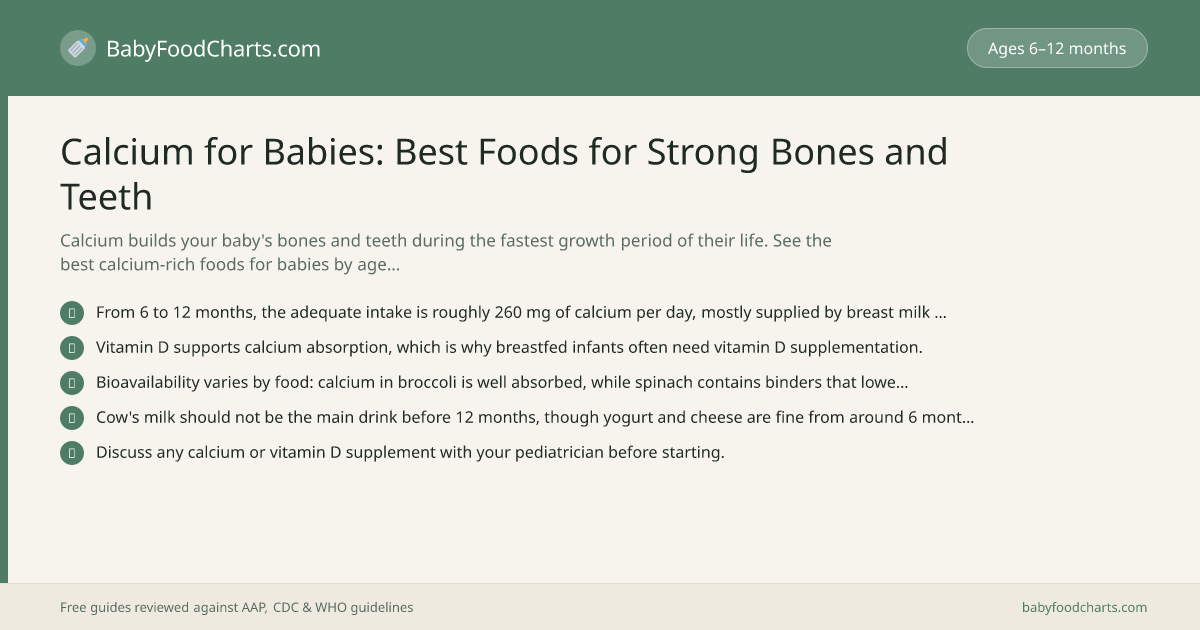

Your baby needs calcium to build the strong bones and teeth that grow rapidly during the first year, and most of it comes from breast milk or formula, with calcium-rich solids like yogurt, cheese, and well-cooked broccoli filling in the rest as your baby eats more. Calcium also supports muscle function, nerve signaling, and a healthy heartbeat, making it one of the foundational minerals of early nutrition.
Why Calcium Matters in the First Year
Bones are not finished structures at birth. They harden and lengthen throughout infancy, and calcium is the primary building block of that process. Babies are laying down the mineral framework they will draw on for years, so a steady supply matters.
The good news is that nature front-loads the calcium supply. Breast milk and infant formula are both rich, well-absorbed sources, and they remain the main drink throughout the first year. Solid foods are a complement, not a replacement.
How Much Calcium Babies Need
From 6 to 12 months, the adequate intake is roughly 260 mg per day. A baby drinking typical amounts of breast milk or formula is already meeting most of that target. As milk feeds gradually make room for solids in the second half of the first year, calcium-containing foods help keep intake steady.
Best Calcium-Rich Foods for Babies
Dairy is the most familiar source, but it is far from the only one. Plain full-fat yogurt is a creamy, easy first food. Pasteurized cheeses, grated or melted into soft dishes, add both calcium and flavor. For dairy-free families, calcium-set tofu is an excellent option, and some green vegetables contribute too.
| Food | Notes |
|---|---|
| Yogurt | Plain, full-fat, unsweetened; smooth and easy to scoop |
| Cheese | Pasteurized, grated or melted into soft foods |
| Tofu | Calcium-set tofu is a strong plant source; soft and mashable |
| Broccoli | Steam until very soft; offer as small florets or mashed |
| Spinach | Cook well and serve mixed into purees or grains |
A Note on Greens and Absorption
Not all calcium is absorbed equally. The calcium in broccoli is absorbed quite well, while spinach contains compounds that bind some of its calcium, making it less available. This is not a reason to skip spinach, which offers iron and other nutrients, but it is why variety beats relying on any single food.
The term for this is bioavailability, how much of a nutrient the body can actually absorb and use. Naturally occurring oxalates in foods like spinach bind calcium and reduce its bioavailability, whereas the calcium in dairy, calcium-set tofu, and low-oxalate greens such as broccoli is more readily absorbed. Adequate vitamin D further supports calcium uptake, which is one reason vitamin D supplementation is commonly advised for breastfed infants. Offering a mix of well-absorbed sources, rather than relying on any single food, is the most reliable approach.
Calcium and Vitamin D Work Together
Calcium gets into bones with help from vitamin D, which the body uses to absorb the mineral from food. Because many babies, especially those who are breastfed, may not get enough vitamin D from diet alone, pediatricians frequently recommend a vitamin D supplement. This pairing is why the two nutrients are so often discussed side by side.
Building Calcium Into Daily Meals
You do not need to track milligrams. Instead, aim for a rhythm: a dollop of yogurt at breakfast, soft broccoli or tofu at lunch, a sprinkle of cheese on dinner. Over a week, this variety adds up to plenty of calcium without any single meal carrying the load.
Sample Texture Progression
- Around 6 months: smooth yogurt, mashed tofu, finely mashed well-cooked broccoli.
- 7–9 months: small soft broccoli florets, grated cheese melted into purees, tofu cubes.
- 10–12 months: finger-food sized cheese pieces, tofu strips, mixed vegetable medleys with greens.
As your baby develops pincer grasp and chewing skills, the same calcium-rich foods can move from puree to finger food, keeping mealtimes engaging.
When to Check With Your Pediatrician
Most babies eating a varied diet alongside breast milk or formula get the calcium they need. Reach out to your pediatrician if your baby avoids all dairy and you are unsure about alternatives, if you are concerned about bone development, or before starting any supplement. They can look at your baby's whole diet and growth, not just one nutrient, and give guidance that fits your family.
Calcium is a long game. By offering a colorful mix of dairy or fortified alternatives, tofu, and green vegetables now, you are helping set the foundation for the strong bones and teeth your child will rely on for life.
Frequently asked questions
How much calcium does my baby need each day?
From 6 to 12 months, the recommended adequate intake is about 260 mg of calcium per day. Breast milk or formula supplies most of this, with solid foods adding the rest as your baby eats more.
Can my baby drink cow's milk for calcium?
Cow's milk should not be the main drink before 12 months, but small amounts cooked into food or full-fat yogurt and cheese are fine from around 6 months. Breast milk or formula remains the primary drink in the first year.
Do dairy-free babies get enough calcium?
Yes, with planning. Calcium-set tofu, fortified plant milks used in cooking, well-cooked broccoli, and certain leafy greens can supply calcium. Talk to your pediatrician if your baby avoids dairy.
Does calcium need vitamin D to work?
Vitamin D helps the body absorb calcium, which is why the two are often discussed together. Many breastfed babies are advised to take a vitamin D supplement; ask your pediatrician.
Can babies get too much calcium?
Excessive calcium, usually from supplements rather than food, can interfere with iron and zinc absorption. Food-based calcium from a varied diet is the safest approach.
When can I offer yogurt and cheese?
Plain full-fat yogurt and pasteurized cheese can be introduced from around 6 months as part of a varied diet, even though cow's milk as a drink waits until 12 months.
Sources & references
- Vitamin D, Centers for Disease Control and Prevention
- Infant and young child feeding, World Health Organization
BabyFoodCharts Editorial Team
Reviewed against current pediatric feeding guidance
Our editorial team researches and reviews every guide for accuracy and clarity. This content is educational and is not a substitute for advice from your own pediatrician.
Browse these topics
Related articles
Continue reading
Read nextFiber for Babies: Digestion, Constipation, and Best FoodsRecently updated
Note: BabyFoodCharts provides general educational information. It is not medical advice. Consult your pediatrician before introducing new foods, especially common allergens.