
Baby Food Charts
9 Month Baby Food Chart: Self-Feeding and Family Food Prep
See what to feed a 9-month-old as they start self-feeding. Our complete 9-month baby food chart covers finger foods, soft table foods, portions, and a sample meal plan.

At 9 months, babies handle chunkier, lumpier textures, use the pincer grasp to pick up small pieces, and eat three meals plus one or two snacks alongside milk feeds. Self-feeding becomes a daily event.
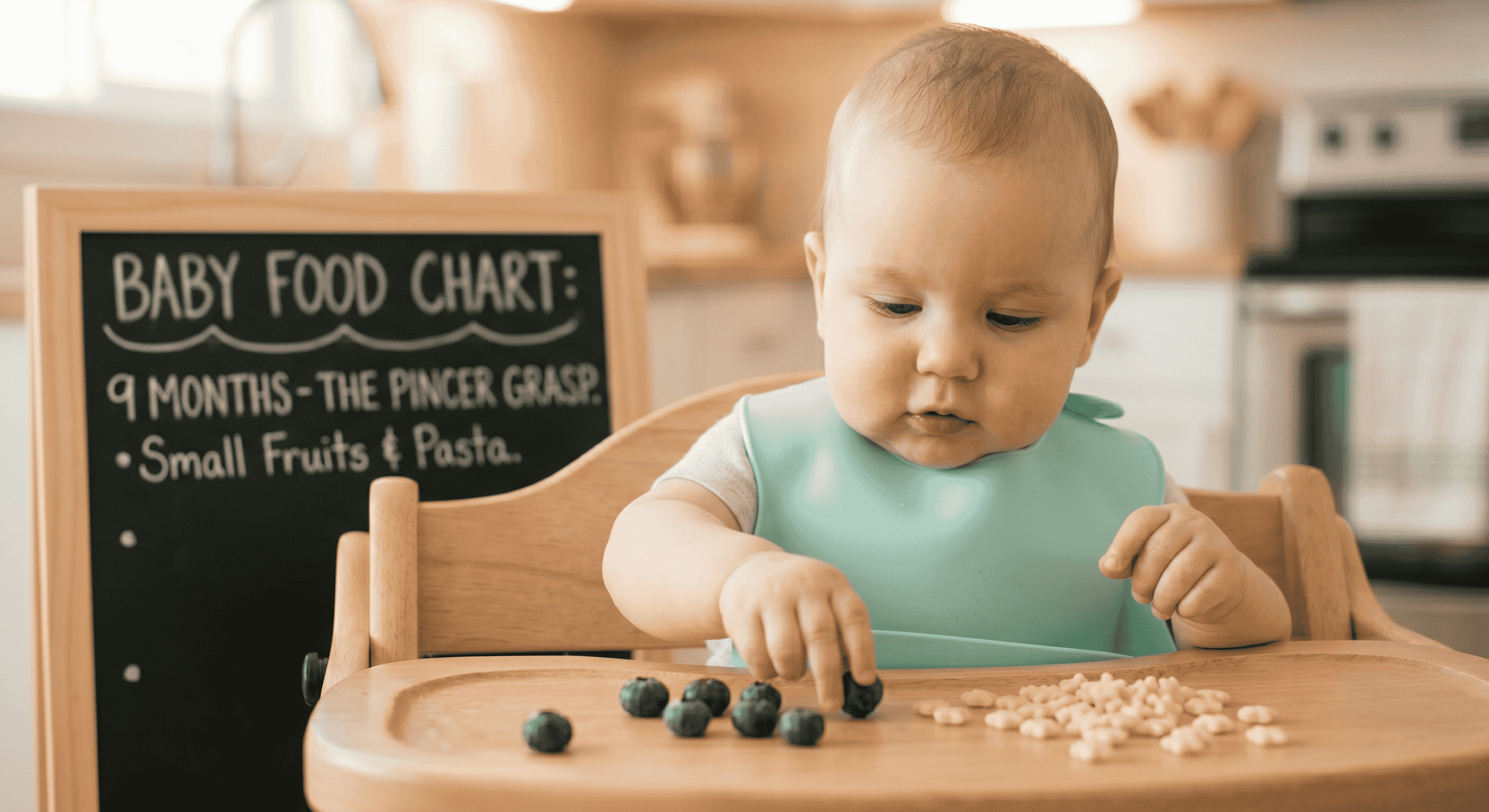
9 Months – Developing the Pincer Grasp (Small Foods)
At 9 months, the focus shifts to fine motor precision. This close-up highlights the baby's hands. Seated in the same high chair, the toddler is concentrating intently on picking up very small items. The tray holds tiny, cooked pastina stars and ripe blueberries. The photo captures the moment the baby uses their thumb and forefinger to successfully grasp a single blueberry. The background chalkboard confirms the milestone: "BABY FOOD CHART: 9 MONTHS - THE PINCER GRASP. Small Fruits & Pasta."
What's new at 9 months
The pincer grasp (thumb and forefinger) lets your baby pick up small soft pieces, so finger foods become easier and more fun. You can also move from purees toward minced and chopped textures to build chewing skills.
9 month baby food chart
| Time | Feeding | Example foods | Amount |
|---|---|---|---|
| Morning | Breast milk or formula | - | Full feed |
| Breakfast | Solids | Scrambled egg, toast fingers, banana | 4–6 tbsp |
| Snack | Solids | Soft fruit pieces, yogurt | Small |
| Lunch | Solids | Minced beef, sweet potato, broccoli | 5–7 tbsp |
| Snack | Breast milk or formula | - | Full feed |
| Dinner | Solids | Lentil and veg mash, avocado | 5–7 tbsp |
| Before bed | Breast milk or formula | - | Full feed |
Building chewing and self-feeding
Offer a mix of textures and let your baby get hands-on, even when it's messy. Pre-loaded spoons (you load, they bring it to their mouth) are a great way to build independence.
Foods to keep avoiding
Honey, whole nuts, hard raw vegetables, large round foods like whole grapes, and added salt and sugar should still be off the menu. Cut round foods lengthwise and supervise every meal.
At 9 months, complementary feeding emphasizes energy-dense meals and progressively coarser textures that strengthen chewing and oral-motor development. With milk supplying a smaller share of calories, daily iron-rich foods remain central to replenishing iron stores and supporting growth. Encouraging self-feeding within a responsive feeding approach lets your baby practice independence while continuing to regulate intake by appetite.
Frequently asked questions
What can a 9 month old eat?
A 9 month old can eat chunkier mashed foods and a wide variety of soft finger foods, including iron-rich proteins, grains, dairy, and most fruits and vegetables. Continue offering breast milk or formula alongside meals.
How much milk does a 9 month old need?
Most 9 month olds still take around 3–4 breast milk or formula feeds a day (roughly 20–24 oz of formula). Solids are now a meaningful part of nutrition, but milk remains important.
Sources & references
- How Much and How Often to Feed Your Baby, Centers for Disease Control and Prevention
- Iron, Centers for Disease Control and Prevention
- Feeding your baby: 6–12 months, UNICEF
- Your baby's first solid foods, NHS
BabyFoodCharts Editorial Team
Reviewed against current pediatric feeding guidance
Our editorial team researches and reviews every guide for accuracy and clarity. This content is educational and is not a substitute for advice from your own pediatrician.
Browse these topics
Related articles
Continue reading
Read next10 Month Baby Food Chart: Table Foods and Family MealsRecently updated
Note: BabyFoodCharts provides general educational information. It is not medical advice. Consult your pediatrician before introducing new foods, especially common allergens.