
Toddler Feeding Guides
3 Year Old Food Chart: Toddler Nutrition Guide & Sample Menu
Complete 3-year-old food chart with daily portions, sample menus, nutritional targets, and key dietary milestones for ages 36 months. Paediatrician reviewed.

The third birthday marks the final milestone of the toddler nutrition years. By age 3, most children can eat nearly all family foods with simple preparation adjustments, have developed clear food preferences, and are beginning to develop the attention span and social skills that make family mealtimes genuinely shared experiences. This chart covers exactly what a 3-year-old needs nutritionally, how much to serve, and how to translate that into practical daily feeding.
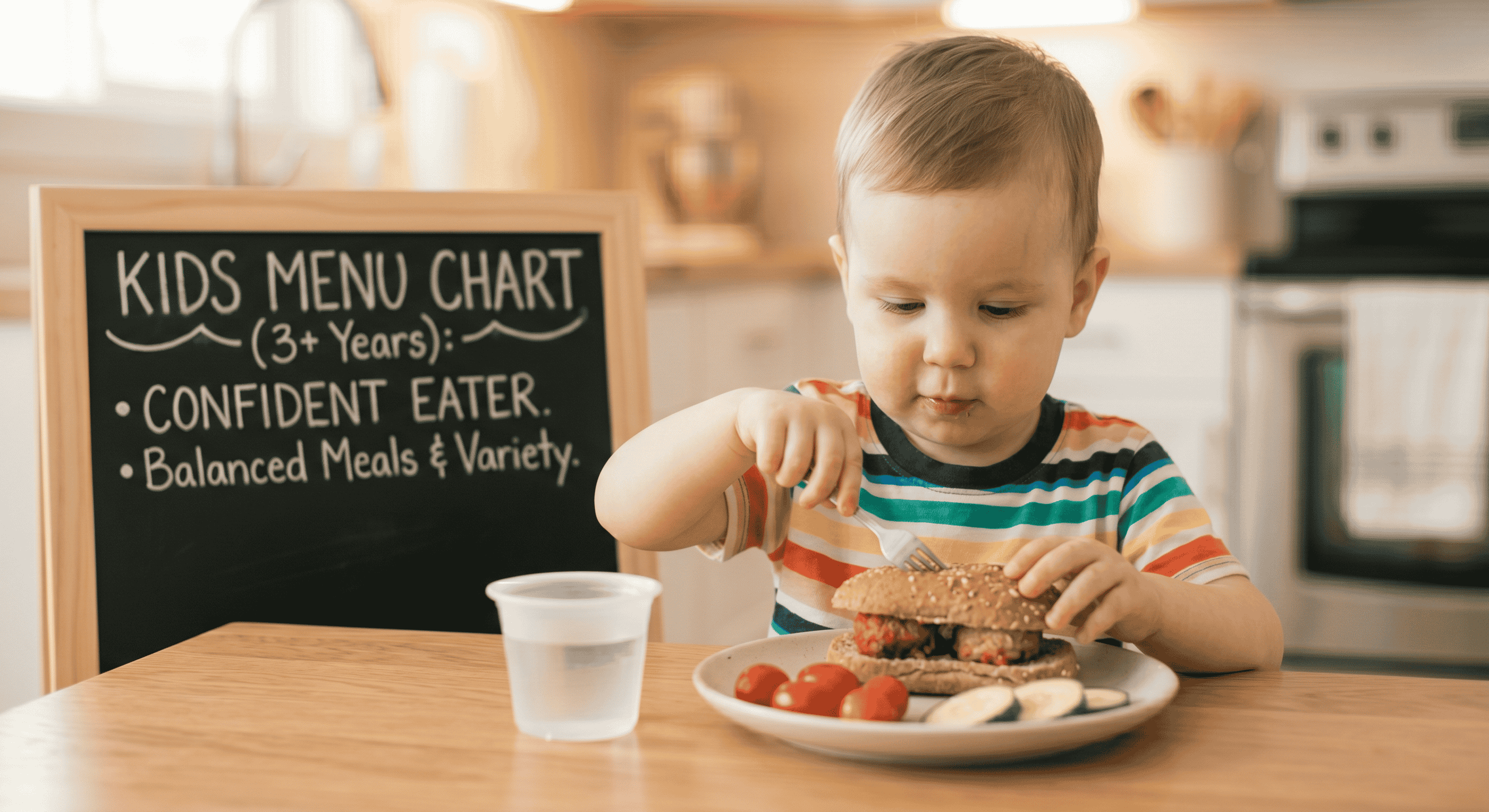
3 Years – Confident Eater (Balanced, Independent Meals)
The final image shows the culmination of the journey: a 3-year-old confident eater. The child sits independently at the main family table in the warm, softly lit kitchen. They are eating a balanced, structured meal: a mini turkey meatball sub on a whole-grain bun, a side salad with cherry tomatoes, and water. The child handles their fork and open cup with confidence. In the background, a hanging menu board summarises the stage: "KIDS MENU CHART (3+ Years): CONFIDENT EATER. Balanced Meals & Variety."
What changes nutritionally at 3 years
Calorie needs have grown
The 1-year-old needed approximately 900–1,000 calories per day. By age 3, the requirement has grown to 1,000–1,400 calories, reflecting greater body size, increased activity, and the metabolic demands of sustained growth.
The additional calories should come primarily from increased portion sizes of nutrient-dense whole foods — not from adding processed snacks or sweetened drinks.
Portion sizes scale up
The familiar "1 tablespoon per year of age" rule now yields:
- 3 tablespoons of pasta or rice
- 3 tablespoons of vegetables
- 3 tablespoons of protein (meat, fish, legumes)
- 3 tablespoons of fruit
This is still a small amount by adult standards — expect that your 3-year-old's dinner plate looks almost empty to you. That is entirely appropriate.
Milk transitions to low-fat
If not already switched at the second birthday, the transition from whole milk to low-fat (2% or 1%) milk applies by age 3 for most children. The brain myelination that required the additional fat from whole milk through age 2 has progressed. Continue at 16–20 oz per day.
Iron needs remain unchanged
The iron requirement for 3-year-olds remains 7 mg per day — the same as at 12 months. This is one of the most frequently missed nutritional targets at this age, because many parents assume the dietary iron focus "is a baby thing." Continue prioritising iron-rich foods daily.
3-year-old food chart
| Time | Meal | Sample foods | Portions |
|---|---|---|---|
| 7:30 am | Breakfast | Iron-fortified oatmeal with banana + scrambled egg + low-fat milk | 3 tbsp oatmeal, 1 egg, 3 tbsp banana, 6 oz milk |
| 10:00 am | Morning snack (optional) | Cheese cubes + apple slices + water | 2 cubes cheese, 3 thin slices apple |
| 12:30 pm | Lunch | Wholegrain pasta with minced meat sauce + steamed broccoli + water | 3 tbsp pasta + sauce, 3–4 florets |
| 3:00 pm | Afternoon snack | Yogurt + quartered strawberries + rice crackers | 4 oz yogurt, 3 tbsp fruit, 3 crackers |
| 6:00 pm | Dinner | Salmon fillet flaked + soft-cooked rice + roasted sweet potato + milk | 2–3 tbsp fish, 3 tbsp rice, 3 tbsp sweet potato, 6 oz milk |
Portion sizes at 36 months
| Food group | Daily servings | 1 serving at age 3 | Best sources |
|---|---|---|---|
| Grains (whole grain preferred) | 4–5 | 3 tbsp cooked pasta/rice; 1/2 slice bread | Oatmeal, wholegrain bread, pasta, rice, quinoa |
| Vegetables | 2–3 | 1/4 cup (4 tbsp) soft-cooked or raw soft vegetables | Broccoli, carrots, sweet potato, peas, spinach |
| Fruit | 2 | 1/4 cup (4 tbsp) | Banana, strawberries, apple (thin slices), mango, kiwi |
| Protein (meat/fish/egg/legume) | 2 | 2–3 tbsp meat/fish; 1 egg; 3 tbsp legumes | Chicken, salmon, eggs, lentils, chickpeas, beef |
| Dairy | 2–3 | 6 oz low-fat milk; 4 oz yogurt; 1 oz cheese | Low-fat milk, yogurt, cheese, kefir |
| Healthy fats | At most meals | 1/4 avocado; 1 tsp nut butter; olive oil drizzle | Avocado, nut butters (thin spread), olive oil |
Nutritional priorities at age 3
Iron: still the most critical nutrient
Iron deficiency is more common at age 3 than most parents realise. The risk factors at this age include:
- Excess milk intake crowding out iron-rich solid foods
- Picky eating phase that leads to rejection of meat and legumes
- Substitution of processed snacks for nutrient-dense meals
Daily iron target: 7 mg
Meeting this target requires intentional daily choices:
- Iron-fortified oatmeal at breakfast: ~3–4 mg iron (half the daily need from one meal)
- Legumes 3–4 times per week: lentils, chickpeas, kidney beans in pasta sauce, soup, or hummus
- Meat 3–4 times per week: minced beef, shredded chicken, or lamb in family meals
- Iron absorption booster: pair every plant iron source with a vitamin C food at the same meal
Calcium and vitamin D
At age 3, the calcium target increases to 700 mg per day (up from the 12–24 month target of 260 mg — this is one of the largest single-year increases in the nutrition guidelines). This is because skeletal mineralisation is proceeding rapidly and bone density established in early childhood predicts long-term bone health.
Meeting 700 mg calcium per day:
- 6 oz low-fat milk: ~220 mg calcium
- 4 oz yogurt: ~170 mg calcium
- 1 oz cheddar cheese: ~200 mg calcium
- Two servings of dairy at meals covers most of the daily requirement
Vitamin D at 600 IU per day remains the standard recommendation. Most toddlers require supplementation — dietary sources (fortified milk, eggs, salmon) rarely meet the full 600 IU target without supplement support.
Zinc: the overlooked growth mineral
Zinc supports linear growth, immune function, and cognitive development. The target for 3-year-olds is 3 mg per day. Best sources include red meat, poultry, legumes, pumpkin seeds (ground or in butter), and whole grains.
Zinc is often low in picky eaters who reject meat and prefer carbohydrate-heavy diets. If your 3-year-old primarily eats crackers, pasta, and bread, zinc adequacy is worth discussing with your pediatrician.
Foods that are now appropriate at 3 years
Many foods that required significant preparation at 12–18 months can now be offered with less modification:
Previously high-risk, now lower-risk at 3:
- Thin apple slices (skin on if soft enough)
- Soft raw cucumber sticks (still watch portion size)
- Grated raw carrot (not sticks)
- Soft bread pieces (no longer needs to be toasted for safety)
- Diced strawberries (no longer need to be quartered if very ripe)
- Cooked meat that is not pre-shredded (if not tough)
Still require precautions at 3:
- Round grapes, cherry tomatoes, olives: still quarter until age 4
- Whole nuts: still avoid until age 4 (use nut butters thinly spread)
- Popcorn: still avoid until age 4
- Hard raw carrot sticks: still a choking risk; use grated
- Large thick chunks of anything: still requires age-appropriate cutting
Sample full week of meals for a 3-year-old
Monday
- Breakfast: Iron-fortified oatmeal with milk, mashed banana stirred in, and a handful of quartered blueberries
- Lunch: Wholegrain pasta with lentil bolognese sauce and steamed broccoli
- Snack: Cheese cubes and watermelon pieces
- Dinner: Shredded chicken thighs in a simple tomato sauce over rice with soft-cooked peas
Tuesday
- Breakfast: Scrambled eggs (2) on whole grain toast + sliced strawberries
- Lunch: Hummus and soft pitta triangles + cucumber sticks + carrot (grated)
- Snack: Full-fat yogurt and iron-fortified cereal
- Dinner: Salmon flaked over sweet potato mash with soft green beans
Wednesday
- Breakfast: Wholegrain pancakes topped with natural yogurt and quartered grapes
- Lunch: Lentil soup + buttered whole grain roll
- Snack: Apple slices + thin peanut butter spread
- Dinner: Minced lamb tacos in soft tortillas with avocado mash and very soft salsa
Thursday
- Breakfast: Iron-fortified cereal with low-fat milk + kiwi (sliced)
- Lunch: Egg salad on whole grain bread + steamed broccoli
- Snack: Cheese + whole grain crackers + quartered cherry tomatoes
- Dinner: Chickpea and vegetable curry over rice with natural yogurt
Friday
- Breakfast: Oatmeal with stewed apple + hard-boiled egg on the side
- Lunch: Chicken noodle soup + whole grain bread
- Snack: Banana + thin almond butter
- Dinner: Fish (cod or haddock) + soft-cooked potato wedges + peas
Saturday
- Breakfast: Avocado on whole grain toast + soft-boiled egg + orange segments
- Lunch: Bean and cheese quesadillas + salsa + yogurt dip
- Snack: Blueberry smoothie (whole milk + blueberries + banana + spinach)
- Dinner: Beef meatballs + wholegrain pasta + tomato sauce + steamed courgette
Sunday
- Breakfast: Family breakfast — scrambled eggs + smoked salmon + whole grain toast
- Lunch: Family roast — shredded chicken or lamb + roasted root vegetables + mashed potato
- Snack: Yogurt + fresh fruit
- Dinner: Light — soup + bread + cheese
Managing picky eating at 3
Age 3 is the statistical peak of picky eating. A 3-year-old who ate anything at 12 months and was cautiously expanding their range at 18 months may be firmly refusing many foods by their third birthday. This is developmental and does not mean you have failed.
What works:
- Division of Responsibility: you decide what, where, and when. Your toddler decides whether and how much.
- Exposure without pressure: serve rejected foods on the plate without comment or expectation
- Family mealtimes: eat the same food alongside your toddler; modelling is more powerful than any persuasion
- Consistent timing: hunger is the best motivator; grazing removes it
What does not work:
- Bribing or rewarding with dessert (consistently increases preference for sweet foods)
- Hiding vegetables (builds zero acceptance for visible vegetables)
- Forcing bites (increases negative mealtime emotion and food aversion)
- Preparing separate "kids' meals" for every meal (removes the bridge to family food)
The 3-year-old food chart is the final one for the toddler years — from here, eating patterns become increasingly similar to the family's. The variety, structure, and positive mealtime relationship you establish now carry directly forward into childhood.
Frequently asked questions
How many calories does a 3-year-old need per day?
Active 3-year-olds typically need 1,000–1,400 calories per day. This varies by activity level, growth rate, and body size. Rather than counting calories, use the serving size guide: 1 tablespoon of each food per year of age, across 3 meals and 1–2 small snacks.
What should a 3-year-old eat in a day?
A typical day for a 3-year-old should include: 4–5 servings of whole grains, 2–3 servings of vegetables, 2 servings of fruit, 2 servings of protein (meat, fish, eggs, or legumes), 2 servings of dairy, and small amounts of healthy fat. Offer 3 structured meals and 1–2 planned snacks. Avoid grazing.
Can a 3-year-old eat the same food as adults?
Mostly yes, with a few adjustments: cut round foods (grapes, cherry tomatoes) into quarters, avoid whole nuts until age 4, limit added salt and sugar, and serve portions appropriate for their size (1 tbsp per year of age per food). Most family meals are appropriate for 3-year-olds with these modifications.
How much milk should a 3-year-old drink?
Most 3-year-olds need 16–20 oz (2–2.5 cups) of low-fat milk per day, or the equivalent from yogurt and cheese. This satisfies calcium and vitamin D needs without displacing solid food intake. Do not exceed 24 oz — excess milk displaces iron-rich foods and is the primary cause of toddler iron deficiency.
My 3-year-old is extremely picky — is this normal?
Yes. Picky eating peaks between ages 2 and 4 as toddlers assert autonomy and food neophobia (fear of new foods) is at its developmental height. Research shows most children need 8–15 exposures to a new food before accepting it. Keep offering, keep family meals positive, and do not force or bribe. Most picky eating resolves by school age.
When should I be concerned about my 3-year-old's eating?
Seek a feeding evaluation if your 3-year-old: accepts fewer than 20 total foods, is losing weight or falling off their growth curve, gags or vomits on most foods, can eat only pureed or very specific textures, or shows extreme distress at the sight of new foods. These may indicate a feeding disorder requiring professional support.
Sources & references
- Sample Menu for a Two-Year-Old, HealthyChildren.org — AAP
- USDA Dietary Guidelines for Americans 2020–2025, USDA
- Feeding Your 1- to 2-Year-Old, KidsHealth — Nemours
- Toddler Nutrition, CDC
- Iron Deficiency Anaemia in Toddlers, Pediatrics — AAP
BabyFoodCharts Editorial Team
Reviewed against current pediatric feeding guidance
Our editorial team researches and reviews every guide for accuracy and clarity. This content is educational and is not a substitute for advice from your own pediatrician.
Browse these topics
Related articles
Continue reading
Read nextBest Finger Foods for Toddlers: 12–36 Month Complete GuideRecently updated
Note: BabyFoodCharts provides general educational information. It is not medical advice. Consult your pediatrician before introducing new foods, especially common allergens.