
Toddler Feeding Guides
Complete Toddler Nutrition Guide: Age 1–3 Requirements, Servings & Best Foods
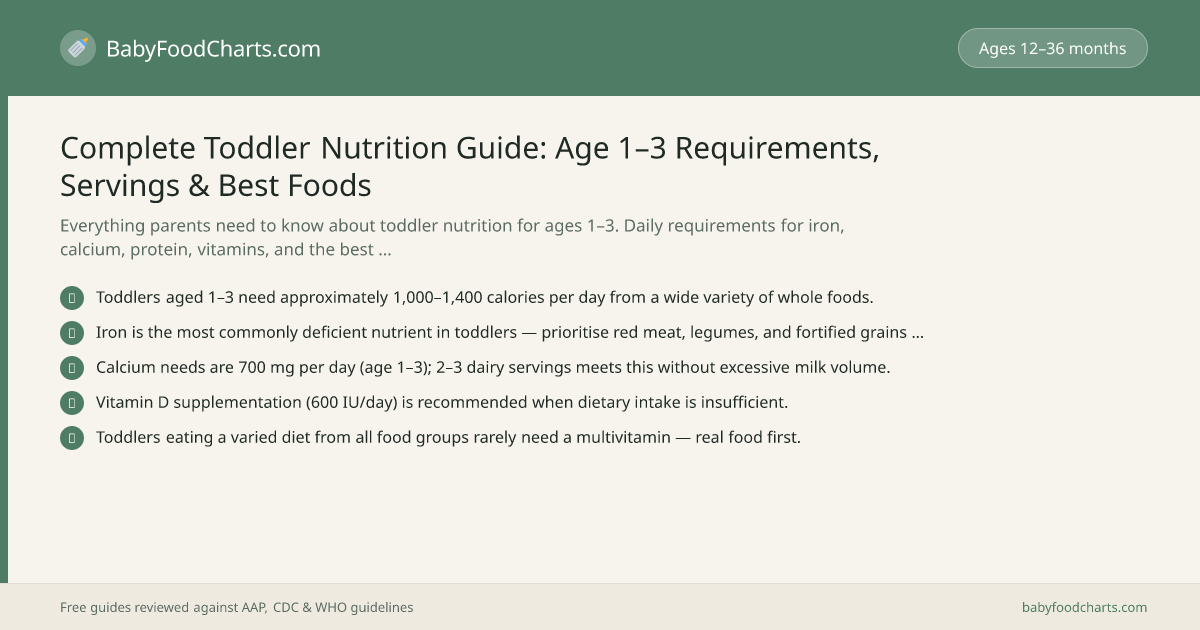
Everything parents need to know about toddler nutrition for ages 1–3. Daily requirements for iron, calcium, protein, vitamins, and the best foods to meet them all.

The toddler years — ages 1 to 3 — are among the most nutritionally demanding periods of childhood. Rapid brain development, muscle growth, bone mineralisation, and immune system maturation all depend on consistent, varied nutrition at a time when toddlers are also becoming famously selective about what they eat. Understanding exactly what nutrients toddlers need, how much, and which foods deliver them most efficiently transforms an overwhelming task into a manageable daily plan.
Calorie needs for toddlers ages 1–3
Toddlers need fewer calories per kilogram of body weight than infants, but their total daily requirement is still substantial given their small body size and high activity levels.
| Age | Boys (kcal/day) | Girls (kcal/day) | Activity adjustment |
|---|---|---|---|
| 12–18 months | 950–1,050 | 900–1,000 | +100–200 kcal if very active |
| 18–24 months | 1,000–1,100 | 950–1,050 | +100–200 kcal if very active |
| 2 years | 1,100–1,200 | 1,000–1,100 | +100–200 kcal if very active |
| 3 years | 1,200–1,400 | 1,100–1,300 | +150–250 kcal if very active |
These are daily averages. Toddler appetite varies day to day based on growth spurts, activity, illness, and developmental changes. A toddler who eats very little one day typically compensates at the next meal or the next day — trust the process.
Macronutrients: protein, fat, and carbohydrates
Protein
Daily requirement: 13 g/day for ages 1–3 (Dietary Reference Intake)
Protein provides amino acids for muscle synthesis, immune function (antibodies are proteins), enzyme production, and growth. Adequate protein intake is rarely a problem in toddlers who eat meat, dairy, eggs, or legumes regularly.
Best toddler protein sources:
| Food | Serving size | Protein |
|---|---|---|
| Chicken thigh (shredded) | 2 tbsp | 7 g |
| Egg (scrambled) | 1 egg | 6 g |
| Greek yogurt (full-fat) | 4 oz | 8 g |
| Canned salmon (flaked) | 2 tbsp | 6 g |
| Lentils (cooked) | 2 tbsp | 4 g |
| Cheddar cheese | 1 oz | 7 g |
| Firm tofu (cubed) | 2 tbsp | 5 g |
| Black beans (cooked) | 2 tbsp | 3 g |
A typical toddler day (egg at breakfast, yogurt as a snack, chicken at dinner) easily reaches 13 g of protein.
Dietary fat
Daily recommendation: 30–40% of total calories from fat for ages 1–3
Dietary fat is not just a calorie source for toddlers — it is a critical nutrient. The brain is approximately 60% fat by dry weight, and the fatty myelin sheath that insulates brain neurons continues forming through the toddler years. Low-fat diets are inappropriate for children under 2 years old.
Do not switch to reduced-fat milk before age 2 without a specific medical reason. Offer full-fat yogurt, avocado, nuts (as nut butter), olive oil, fatty fish, and full-fat cheese freely.
Carbohydrates
Daily recommendation: 45–65% of total calories from carbohydrates
Carbohydrates are the brain's primary fuel and power toddlers' extraordinary activity levels. Choose complex carbohydrates — whole grains, legumes, vegetables, and fruit — over refined sugars and white flours. The American Heart Association recommends that children under 2 years consume no added sugar at all; ages 2–18 should limit added sugar to less than 25 grams per day.
Micronutrients: the critical seven for toddlers
1. Iron
Daily requirement: 7 mg/day for ages 1–3
Iron is the most commonly deficient nutrient in toddlers worldwide. After the first birthday, formula disappears (which was iron-fortified), breast milk provides minimal iron, and cow's milk contains virtually none. At the same time, iron-depleted toddlers who drink large volumes of milk eat fewer iron-rich solid foods — creating a perfect iron-deficiency cycle.
Iron deficiency affects cognitive development, attention span, language acquisition, and motor skills. It can have lasting effects on academic performance even when corrected years later.
Haem iron (most absorbable — from animal sources):
- Beef, lamb, venison
- Dark chicken or turkey meat
- Pork
- Oysters, clams
- Sardines, salmon
Non-haem iron (plant-based — pair with vitamin C):
- Lentils: 2 tbsp = 2 mg
- Chickpeas: 2 tbsp = 1.5 mg
- Black beans: 2 tbsp = 1.5 mg
- Fortified toddler cereal: 1/4 cup = 4–8 mg
- Tofu (firm): 2 tbsp = 2 mg
- Quinoa: 2 tbsp = 1.5 mg
- Spinach (cooked): 1 tbsp = 1 mg
2. Calcium
Daily requirement: 700 mg/day for ages 1–3
Calcium builds the bones and teeth that toddlers are rapidly forming. The skeleton is laying down mineral density that will largely determine peak bone mass in adulthood. Adequate calcium during toddlerhood is a genuine long-term health investment.
Best calcium sources for toddlers:
| Food | Serving | Calcium |
|---|---|---|
| Whole cow's milk | 6 oz (180 ml) | 210 mg |
| Full-fat yogurt | 4 oz | 150 mg |
| Cheddar cheese | 1 oz | 200 mg |
| Calcium-fortified plant milk | 6 oz | 200–300 mg |
| Calcium-set tofu | 2 tbsp | 100 mg |
| Broccoli (cooked) | 1/4 cup | 45 mg |
| Fortified orange juice (100%) | 4 oz | 150 mg |
Two to three dairy servings per day (staying within the 16–24 oz milk limit) meets most toddlers' calcium needs.
3. Vitamin D
Daily requirement: 600 IU/day for ages 1–3
Vitamin D is essential for calcium absorption — without adequate vitamin D, even generous calcium intake does not result in strong bones. Few foods naturally contain significant vitamin D. Sunlight triggers skin synthesis, but this is unreliable depending on latitude, skin tone, sunscreen use, and season.
Food sources of vitamin D:
- Fortified whole cow's milk: 100 IU per cup
- Fortified plant milks: 100–130 IU per cup
- Fatty fish (salmon, sardines): 200–450 IU per 2 oz serving
- Egg yolk: 40 IU per yolk
- Fortified toddler cereal: varies by brand, check label
The AAP recommends vitamin D supplementation (400–600 IU/day) for toddlers who do not reliably consume adequate vitamin D from diet and sunlight. This is a low-risk, high-benefit supplementation.
4. Zinc
Daily requirement: 3 mg/day for ages 1–3
Zinc supports immune function, wound healing, taste perception, and growth. Zinc deficiency impairs appetite — meaning zinc-deficient toddlers are less interested in food, which worsens the deficiency. It is not commonly measured unless deficiency is suspected.
Best zinc sources:
- Red meat (beef, lamb): 2 tbsp = 2–3 mg
- Chickpeas (cooked): 2 tbsp = 0.8 mg
- Pumpkin seeds (ground): 1 tsp = 0.7 mg
- Cashew nut butter: 1 tsp = 0.5 mg
- Fortified cereals: varies
5. Omega-3 fatty acids (DHA and EPA)
Daily recommendation: 70 mg DHA + EPA combined for ages 1–3 (ISSFAL guideline)
DHA (docosahexaenoic acid) is the primary omega-3 in brain tissue. It continues accumulating in the brain through at least age 2, supporting cognitive development, language acquisition, and visual acuity. The brain's DHA content strongly correlates with intellectual development in early childhood.
Best sources:
- Fatty fish (salmon, sardines, mackerel): 2 tbsp flaked = 500–1,000 mg DHA
- Fortified foods (some yogurts and cereals)
- DHA supplements (algae-based — preferred over fish oil for purity)
Offer oily fish twice weekly. For toddlers who do not eat fish, a paediatrician-recommended algae-based DHA supplement is a reasonable option.
6. Vitamin A
Daily requirement: 300 mcg RAE per day for ages 1–3
Vitamin A supports immune function, vision (especially night vision), and skin health. It is a fat-soluble vitamin, meaning it requires dietary fat for absorption.
Best sources:
- Sweet potato (mashed): 2 tbsp = 350 mcg
- Carrot (cooked): 1 tbsp = 200 mcg
- Butternut squash: 2 tbsp = 150 mcg
- Spinach (cooked): 1 tbsp = 70 mcg
- Egg yolk: 1 yolk = 75 mcg
- Full-fat milk: 6 oz = 90 mcg (fortified)
Orange and yellow vegetables are the most efficient vehicle for vitamin A for toddlers.
7. B12
Daily requirement: 0.9 mcg/day for ages 1–3
Vitamin B12 is essential for neurological development and red blood cell production. It is found almost exclusively in animal products.
- Meat and poultry: 2 tbsp = 0.5–1 mcg
- Fish: 2 tbsp = 1–2 mcg
- Egg: 1 egg = 0.6 mcg
- Dairy (milk, yogurt, cheese): 0.3–0.5 mcg per serving
- Fortified plant milks and cereals (essential for vegan toddlers)
Building a nutritionally complete toddler day
A simple framework for ensuring nutritional variety: the 5-colour rule. Aim to include at least 3 different colours of vegetables and fruits each day. Colour diversity reflects nutrient diversity — orange/yellow for vitamin A, dark green for iron and folate, red for vitamin C and lycopene, purple for anthocyanins.
Sample nutritionally complete toddler day (18 months):
| Meal | Foods | Key nutrients delivered |
|---|---|---|
| Breakfast | Scrambled egg, whole grain toast, quartered strawberries, whole milk | Protein, iron, B12, vitamin C, calcium |
| Snack | Full-fat yogurt with blueberries | Calcium, vitamin D (fortified), antioxidants |
| Lunch | Lentil and tomato pasta, steamed broccoli, water | Iron, protein, vitamin C, calcium |
| Snack | Avocado on rice cakes | Healthy fat, potassium, fibre |
| Dinner | Salmon, mashed sweet potato, soft peas, whole milk | DHA, vitamin A, iron, calcium, zinc |
This day covers iron (haem and non-haem), calcium, vitamin D (from milk and salmon), DHA, protein, vitamins A and C, and B12 — hitting nearly every critical toddler nutrient.
When to consider supplementation
The AAP's clear supplementation recommendations for toddlers:
-
Vitamin D: 600 IU/day if dietary intake (from fortified milk, fatty fish, and fortified foods) is unlikely to reach 600 IU/day. Most toddlers benefit from supplementation, especially in northern latitudes.
-
Iron: Do not supplement iron routinely without testing. However, a blood iron check at the 12-month well visit is standard of care. If iron is low, iron drops or a multivitamin with iron may be prescribed.
-
Fluoride: If your water supply is not fluoridated and your toddler is using a fluoridated toothpaste (less than a rice-grain amount at 12–24 months), discuss fluoride supplements with your dentist.
Multivitamins are not recommended for toddlers eating a reasonably varied diet. The risk of over-supplementing fat-soluble vitamins (A, D, E, K) exists with multivitamin use. A real food approach always takes priority.
Red flags for nutritional deficiency
Discuss with your pediatrician if your toddler shows:
- Persistent fatigue, pallor, or low energy (may indicate iron deficiency anaemia)
- Frequent infections or slow wound healing (zinc or immune deficiency)
- Bowed legs or delayed walking (vitamin D deficiency — rickets)
- Night blindness or recurrent eye infections (vitamin A deficiency)
- No appetite improvement despite schedule changes (may indicate zinc deficiency)
- Extreme food selectivity affecting multiple food groups
Routine blood tests at the 12- and 24-month well visits catch most nutritional deficiencies early when they are easiest to correct.
Good toddler nutrition is not about perfect meals every day. It is about consistent variety, a reliable structure of meals and snacks, iron-rich foods at every meal, vegetables at every plate, and dairy within appropriate limits. Build these habits now and they become the foundation of a lifetime of healthy eating.
Frequently asked questions
What nutrients are most important for toddlers?
The most critical nutrients for toddlers are iron (brain development, red blood cells), calcium (bone growth), vitamin D (calcium absorption), protein (muscle and tissue growth), zinc (immune function and growth), and omega-3 fatty acids (brain and eye development). Iron is the most frequently deficient.
Do toddlers need a multivitamin?
Most toddlers eating a reasonably varied diet do not need a multivitamin. The AAP recommends vitamin D supplementation (600 IU/day) if dietary intake is insufficient. Iron should be checked at the 12-month well visit. If your toddler eats fewer than 20 different foods or excludes entire food groups, discuss supplementation with your pediatrician.
How much protein does a toddler need per day?
Toddlers aged 1–3 need approximately 13 grams of protein per day. This is easily met with a varied diet: one egg provides 6 g, 2 tablespoons of chicken provides about 7 g, and 2 tablespoons of lentils provides about 4 g. Protein deficiency is rare in toddlers eating meat, dairy, eggs, or legumes.
Can toddlers be vegetarian or vegan?
Yes, but extra planning is required. Vegetarian toddlers need reliable iron from fortified cereals, legumes, tofu, and dark leafy greens; calcium from dairy or fortified plant milks; and vitamin B12 from fortified foods or supplements. Vegan toddlers additionally need DHA from algae-based supplements and may need zinc and iodine supplementation. Consult a pediatric dietitian.
What foods prevent iron deficiency in toddlers?
Best iron sources for toddlers: red meat (beef, lamb), dark poultry meat, oily fish, eggs, lentils, chickpeas, black beans, tofu, iron-fortified toddler cereals, quinoa, and dark leafy greens. Always pair plant-based iron with vitamin C (citrus, capsicum, strawberry) to increase absorption.
How much calcium does a toddler need?
Toddlers aged 1–3 need 700 mg of calcium per day. This is easily met with 2–3 servings of dairy: 1 cup of whole milk provides 300 mg, 4 oz of yogurt provides about 150 mg, and 1 oz of cheese provides about 200 mg. Non-dairy sources include calcium-fortified plant milk, soft tofu, and broccoli.
Sources & references
- Dietary Reference Intakes for Toddlers, National Academies — Institute of Medicine
- Iron Deficiency in Toddlers, CDC
- Vitamin D and Calcium, HealthyChildren.org — AAP
- Omega-3 Fatty Acids for Children, Nutrients Journal — NIH
- Dietary Guidelines 2020–2025, USDA and HHS
BabyFoodCharts Editorial Team
Reviewed against current pediatric feeding guidance
Our editorial team researches and reviews every guide for accuracy and clarity. This content is educational and is not a substitute for advice from your own pediatrician.
Browse these topics
Related articles
Continue reading
Read nextToddler Portion Sizes by Age: Visual Guide + Printable ChartRecently updated
Note: BabyFoodCharts provides general educational information. It is not medical advice. Consult your pediatrician before introducing new foods, especially common allergens.